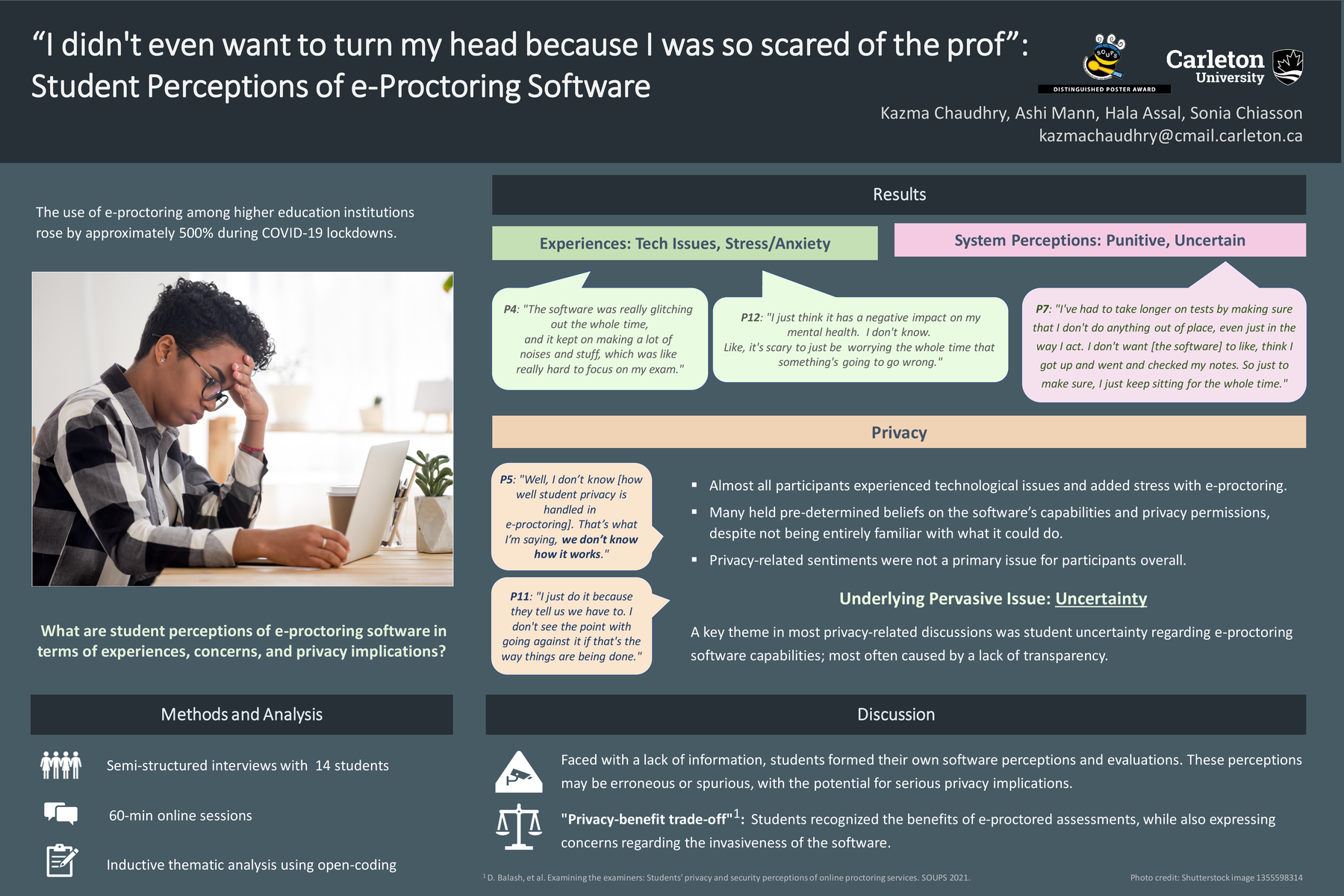
summaryCovid-19 introduced e-proctoring software into universities. Students protested, instructors grappled. I did a multi-study project investigating students' and instructors' privacy perceptions, and provide actionable recommendations for instructors, universities, and edTech software designers.
The situation
the landscapeE-proctoring exploded during Covid-19; institutions adopted e-proctoring fast and with little scrutiny of the human cost. This research sought to investigate how exam surveillance privacy implications impact the pedagogical process for students and instructors, and what it means for the post-pandemic university going forward.
What I set out to answer
RQs 1 and 2What factors influence instructors’ decision-making regarding the use of e-proctored assessments? What is the interplay between students' and instructors’ e-proctoring usage, privacy attitudes, perceptions, and concerns?
What I actually did
study design qualitative comparative study participant samples 14 students and 19 instructors. analysis approachComparative thematic analysis.
What we found
prompt — 2 to 4 findingsEach finding: state it plainly, then give the evidence behind it (a quote, a number, a pattern). Resist listing everything; pick the findings that mattered. Lead with the most counter-intuitive or consequential one.
What changed
promptWhat did anyone do differently because this research exists? Publications and recognition count here (the Distinguished Poster, the TOCHI submission), but push further: design implications, policy conversations, how the field cites or uses it. "What stakeholders did differently" is the test.
What I'd carry forward
promptLimitations honestly stated, what you'd do differently, and what the work taught you as a researcher. A confident limitations paragraph reads as more rigorous, not less.